
Types of Linen Fabric: Everything You Need to Know Before You Buy


If you want to add more linen garments to your wardrobe but feel a bit overwhelmed... because A) it’s kind of pricey, and B) you genuinely don’t know what you’re looking for, this guide is for you!
👋 I’m Leah from Charlie Darwin Textiles, and I’ve been sewing my handmade linen wardrobe for about six years. In that time, I’ve tried an embarrassing number of different types of linens — all different weights, weaves, and densities, from different companies and countries — because I was on a mission to find the best fabric to put on my skin (and eventually on my customers’ skin too).
Here’s the thing: linen can be absolutely magical. It’s breathable, durable, gets softer the more you wear it, and you can genuinely sew heirloom garments that get passed down through generations. But when you don’t get the right stuff? It can be itchy, see-through, and fall apart way faster than you’d like.
So this guide is my attempt to dump my linen brain into yours, in a way that actually helps you make smarter choices next time you’re standing in a fabric store or have 30 tabs open online.
Want to watch instead of read? ⬇️
✨ Your Linen Sourcing Cheat Sheet
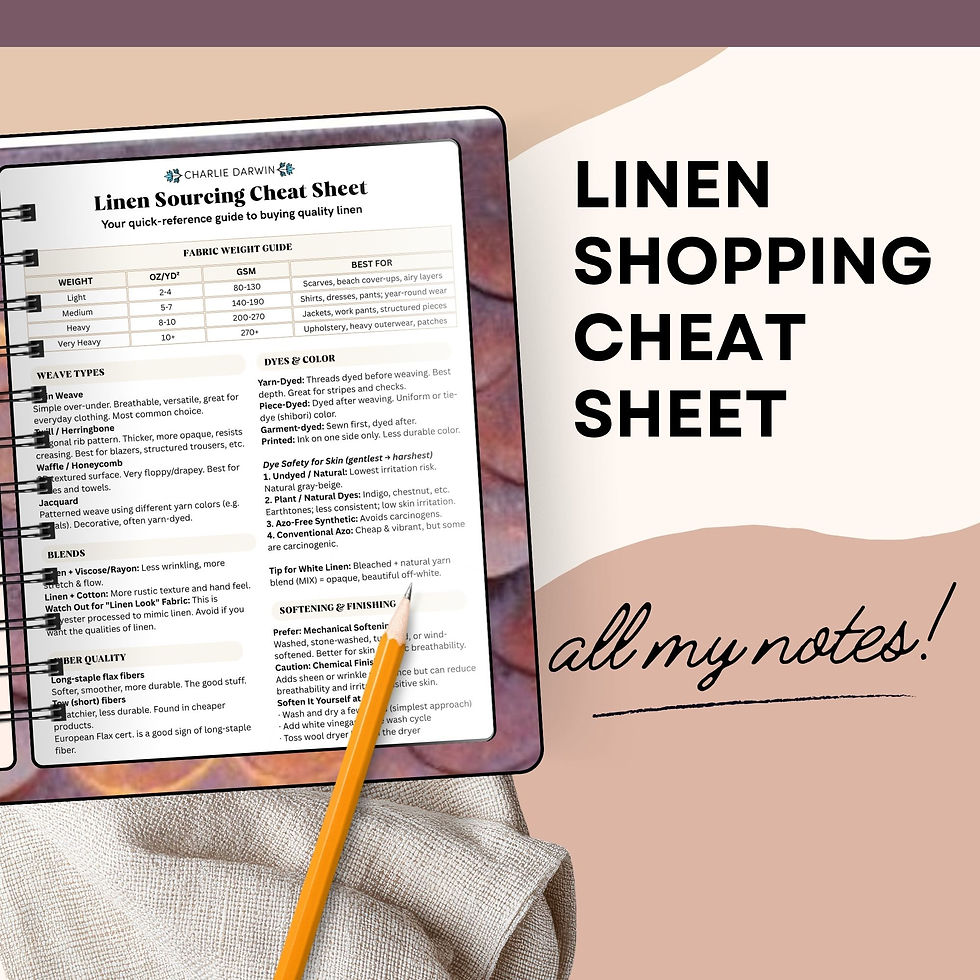
Get the cheat sheet inside of my free program: Sew Your Dream Wardrobe -->
What Actually Is Linen?

Linen is a fabric made specifically from the flax plant. Not hemp. Not cotton. Not rayon. Those all come from their own plants. Linen = flax, full stop. (I know we call it a “linen closet” in the US, which has confused more than a few people — but actual linen fabric is always flax-based.)
The linen fibers live in the long stem of the flax plant, between the inner core and the outer bark. When you pull apart a dried flax stem, you can actually see long, blonde fibers running through it — it’s kind of mesmerizing.

Why Fiber Length Is Everything
The longer the fiber that can be extracted from the flax plant, the softer and more durable the final fabric will be. Long-staple flax fiber = high-quality linen.
There are also shorter fibers (called “tow”) that are extracted as a byproduct. These are less durable and more scratchy, and they’re often used in cheaper linen products. You won’t always be able to find out if a fabric is long or short staple, but certifications like European Flax are a good proxy for long-staple quality.
What About Linen Blends?
I’m no purist — there’s genuinely a time and place for linen blends:
Linen/viscose rayon — less wrinkling, a bit more stretch, slightly more flowy
Linen/cotton — a bit more rustic texture, great casual feel
Just watch out for “linen look” fabrics — these are actually polyester processed to look like linen. They won’t breathe, won’t soften with washing, and won’t give you any of the properties that make linen worth wearing.
Linen Fabric Weights Explained

Weight is probably the most common question I get. Linen fabric weight is measured in ounces per square yard (oz/yd²) or grams per square meter (gsm). Once you understand the ranges, it becomes pretty intuitive:
Lightweight Linen: 2–4 oz (80–130 gsm)
Gauzy and airy — perfect for summer scarves, beach cover-ups, and lightweight layering pieces. It will likely be more transparent and won’t provide much warmth, but it’s lovely if that floaty look is what you’re going for.
Medium Weight Linen: 5–7 oz (140–190 gsm) ← Your Sweet Spot
This is what I reach for 95% of the time for shirts, dresses, and pants. It has great opacity (usually not see-through), decent drape, and fantastic temperature regulation — cool in summer, warmer than you’d expect in fall and winter. If you want to create clothing you can wear in all seasons, this is your fabric.
Heavyweight Linen: 8–10 oz (200+ gsm)
Stiffer and less drapey, but incredibly durable. Great for tailored blazers, structured jackets, and work trousers. It’s not going to flow and move like medium weight, but for structured pieces, that’s exactly the point.
Very Heavy Linen: 10+ oz
This is upholstery territory — beautiful in its own right, and also great for heavy outerwear, knee patches, and bag-making. Not something you’d typically sew a shirt from, but stunning for the right applications.
Linen Weave Types
Weave refers to how the fibers are interlaced on the loom. Linen is a woven fabric (as opposed to knit), meaning it’s made on a loom with horizontal (weft) and vertical (warp) threads. Here are the main weave types you’ll encounter:
Plain Weave

The classic over-under, over-under pattern. This is the most common and most breathable weave for everyday linen clothing. If you’re unsure what weave to choose, plain weave is almost always the right call.
Twill Weave (Including Herringbone)

The threads follow a diagonal rib pattern, making twill linen thicker, more opaque, and slightly stiffer — but also more pliable and resistant to permanent creasing. Popular for tailored pieces: blazers, structured trousers, trench coats, and high-end upholstery.
Waffle / Honeycomb Weave

This one has been trending in the last few years, and it’s got a beautiful textured look. It’s quite floppy — which is actually a feature. Ideal for robes, towels, and garments where you don’t need structure.
Jacquard Weave

A loom setup that allows for two colors of threads to be woven into decorative designs, like this floral motif. The design will be in reverse color on the back side.
Linen Color & Dyes: What You Need to Know

In its natural state, undyed linen is a gray-beige color — not white. So if you see brilliant white linen, it’s been bleached.
A Note on White Linen

One of my favorite options for white linen is a bleached/natural blend — where bleached and undyed yarns are woven together. It creates a beautiful off-white that’s more opaque than fully bleached linen and has a lovely subtle texture. If you’re shopping for white and want something that won’t be see-through, look for this kind of mix.
Dyeing Methods
Yarn-dyed — threads dyed before weaving; great for stripes, checks, and jacquard designs
Piece-dyed — the whole woven fabric is dyed at once; very common for solid colors
Garment-dyed — the finished garment is dyed; everything (threads, buttons, seams) takes on the color evenly
Printed — surface design applied to one side only; less colorfast but fine for certain looks
Dye Safety Standards
Conventional synthetic dyes — also known as AZO dyes — are cheap and vibrant, which is why fast fashion loves them. But some AZO dyes can break down into aromatic amines, known carcinogens that can be absorbed through your skin, especially when you sweat.
The safer alternative is AZO-free dyes, increasingly the standard for quality textiles. Look for OEKO-TEX Standard 100 or GOTS (Global Organic Textiles Standard) — either one confirms AZO-free dyes. You don’t need both; just one is enough.
If you have sensitive skin, I’d recommend looking for naturally dyed linen — using plant-based pigments like indigo, tea, pomegranate, or weld. These make gorgeous rich earth tones (this is what I specialize in for my own garments and sewing kits). Just note that natural dyes are harder to find in fabric stores because they’re harder to standardize at scale.
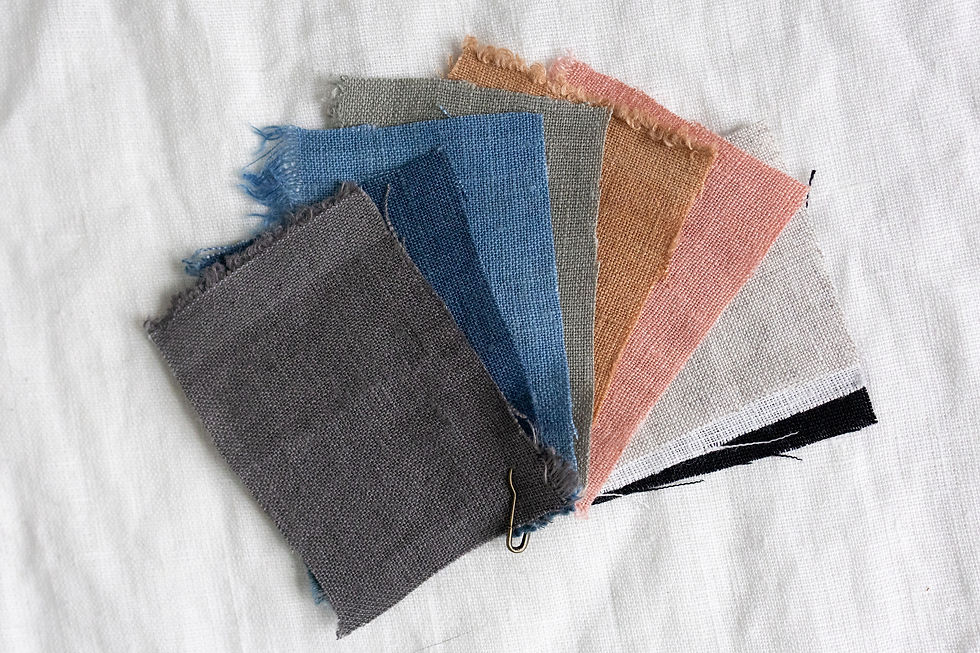
The absolutely safest option for sensitive skin? Undyed linen in its natural state — no bleach, no nothing.
Linen Softness & Fabric Finishing

Linen softens naturally over time as it gets washed and worn — but sometimes you want soft right now. Here’s what to look for:
Chemical Finishing (Avoid If Possible)
Chemical softening uses compounds that add sheen and help the fabric take up dye more easily. Manufacturers might also add water-repellent or wrinkle-resistant coatings. These can negatively affect breathability and are more likely to irritate sensitive skin.
Mechanical Softening (Look for This)
This simulates the natural softening process using motion rather than chemicals — basically mimicking how linen naturally softens on your body over time. Look for any of these terms:
Washed linen — run through a wash/dry cycle multiple times
Stone washed — tumbled with stones to gently break down the fibers
Wind softened — softened through air movement during processing
Tumbled — any tumbling process that adds softness mechanically
DIY Softening Tips
If you’ve bought linen that’s stiffer than you’d like:
Wash and dry it a few times — this alone works really well
Add white vinegar to the wash cycle
Toss wool dryer balls in the dryer
Try a gentle fabric softening product — Fabrics-store.com has a softening potion I’ve genuinely liked; more environmentally friendly and skin-sensitive
Country of Origin: Does It Matter?

Where linen is grown and where it’s woven both affect the final quality. Let’s break it down.
Where Flax Is Grown
The highest quality flax comes from the “flax belt” — France, Belgium, and the Netherlands — where the soils and climate produce some of the longest, strongest fibers. There are groups in the US working to revive domestic flax growing (there’s a group in Pennsylvania I toured once — really exciting!), but European flax still dominates the quality market.
Where It’s Woven
Different countries have different specialties when it comes to weaving linen:
Irish linen — denser and crisper; traditionally used for suits, blazers, and shirting
Belgian and French linen — smooth, strong, long-staple, with fewer slubs (texture irregularities)
Italian linen — lighter, silkier, with a more fluid drape
Eastern European linen (Lithuania, Poland) — homespun, rustic, earthy character; durable and casual. This is the vibe I lean into most with Charlie Darwin — everyday clothes that feel real and earthy, not shiny and polished.
Asian linen (primarily China) — a major global producer, but typically uses shorter tow fibers and more chemical processing, resulting in cheaper, less comfortable fabric. Sometimes blended with ramie. There are exceptions, but it’s the pattern to watch out for.
Certifications to Look For
Masters of Linen — ensures the flax was grown and processed in Western Europe
European Flax — certifies that the flax was grown in France, Belgium, or the Netherlands
Either of these certifications is a good sign you’re getting the real deal — generally more stringent quality and labor standards.
Ready to Start Sewing Your Dream Linen Wardrobe?

Your skin is your largest organ — choosing what goes on your body 24/7 shouldn’t be a guessing game.
That’s exactly why I created Sew Your Dream Linen Wardrobe — my free program for anyone who wants to build a handmade linen wardrobe they actually love wearing.
When You Join, You’ll Get:
The Fabric Sourcing Cheat Sheet — everything from this guide in an easy-to-reference format; keep it nearby next time you’re shopping for linen
Access to the Global Crowdsourced Linen Supplier Spreadsheet — a community-built resource to help you find trusted linen sources worldwide
A personalized pattern roadmap to help you build a cohesive, cozy, lovable linen wardrobe that fits your style
A video library of linen sewing tips to get you sewing garments like a pro
Darwin's Design Studio-- a visualizer for designing garments, choosing colors, etc.
Stop wasting money on the wrong fabric and start sewing and wearing the good stuff. Join Sew Your Dream Linen Wardrobe — it’s completely free!
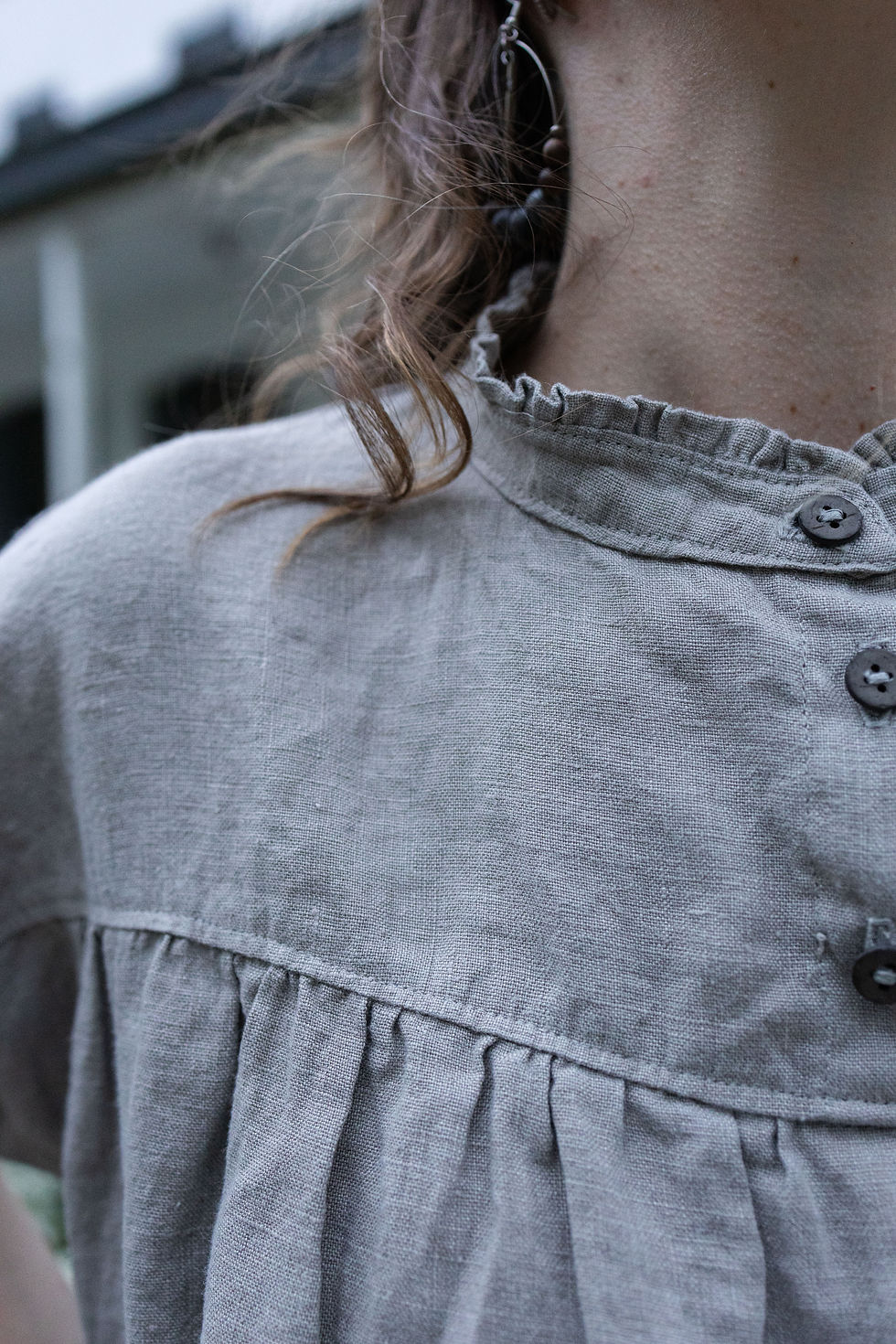


Leah, separating fibre content from the fabric’s actual structure is worth highlighting. I’m with Sewlore, and our linen sewing projects from Sewlore group designs that specify linen or linen blends as planned fabric choices. The collection is a place to compare garment ideas, rather than assume one linen works for everything. Before settling on a design, I would compare the fabric’s weight and drape with the intended silhouette. Would you consider a follow-up comparing the same simple garment in two different linen weights?